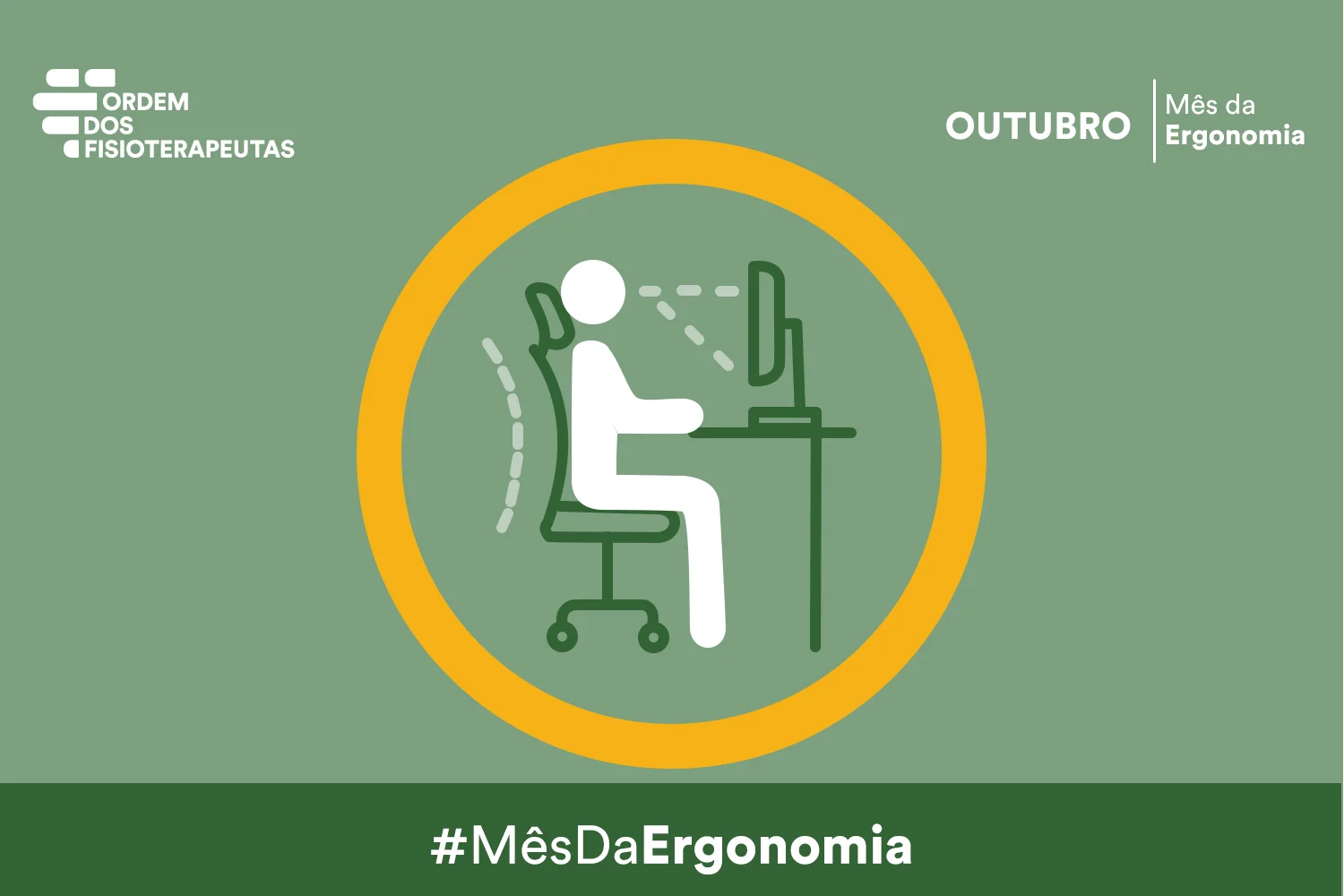
Mover-se no trabalho: o contributo da Fisioterapia para a saúde dos trabalhadores

Outubro é o Mês da Ergonomia, a área interdisciplinar dedicada à adaptação do trabalho às pessoas. A data é também uma oportunidade para recordar que vários dos seus princípios, como a variabilidade de tarefas e posturas, as pausas ou a adequação do posto e da organização do trabalho, estão presentes na intervenção do fisioterapeuta em Saúde Ocupacional, em particular na prevenção e gestão das lesões musculoesqueléticas relacionadas com o trabalho.

As lesões musculoesqueléticas relacionadas com o trabalho resultam da combinação de vários fatores. Podem estar associadas a exigências físicas e biomecânicas, como movimentos repetitivos, aplicação de força, movimentação de cargas ou permanência prolongada na mesma posição, bem como a fatores organizacionais, psicossociais e individuais.

Por isso, a prevenção não passa por procurar uma única “postura correta” para manter ao longo do dia. Garantir maior variabilidade de movimento e posição, promover pausas ativas e ajustar o posto e a organização do trabalho às necessidades da pessoa são estratégias importantes para promover saúde e bem-estar no contexto laboral.


O contributo da Fisioterapia

A Fisioterapia pode dar um contributo específico neste contexto. A Direção-Geral da Saúde reconhece que os fisioterapeutas podem integrar as equipas dos serviços de saúde e segurança do trabalho / saúde ocupacional, de acordo com os riscos profissionais identificados e as prioridades de cada serviço.

Na área da saúde ocupacional, os fisioterapeutas podem contribuir para avaliar a capacidade funcional do trabalhador e as exigências físicas do trabalho, identificar fatores relacionados com problemas musculoesqueléticos e promover estratégias de movimento, exercício, educação e adaptação ajustadas às necessidades de cada pessoa e de cada contexto profissional.


Mover-se durante o trabalho

A campanha “Move at Work”, da Região Europeia da World Physiotherapy, reforça uma ideia simples: o corpo precisa de movimento ao longo do dia de trabalho. Reduzir períodos prolongados sentado, alternar posições, integrar pausas de movimento e criar hábitos mais ativos podem fazer parte de uma abordagem mais saudável ao trabalho.

A Ordem dos Fisioterapeutas destaca o contributo da Fisioterapia para ambientes de trabalho mais ativos, saudáveis e ajustados às necessidades das pessoas, em articulação com os restantes profissionais das equipas de saúde ocupacional.


Aviso de manutenção programada

Informamos que, no dia 29 de outubro de 2026, a partir das 21h00, decorrerá uma intervenção de manutenção programada na infraestrutura tecnológica da Ordem dos Fisioterapeutas.

Durante este período, o acesso ao site institucional e à área reservada dos membros poderá ficar temporariamente indisponível.

Agradecemos a compreensão e lamentamos eventuais inconvenientes

Pedro Maciel Barbosa

Specialist physiotherapist at the Matosinhos Local Health Unit Sub-coordinator for Primary Health Care, Matosinhos Local Health Unit Visiting Assistant Professor at the Porto School of Health Member of the Board of Directors of the Foundation for Health - SNS Member of the General Council of the Order of Physiotherapists

Carlos Sand

Carlos Areia has been a physiotherapist since 2013, and has worked in various hospitals, clinics and clubs in both Portugal and the UK. He began his academic career at Oxford University in 2016, where he led a clinical trial comparing physiotherapy vs surgery in anterior cruciate injuries in 32 hospitals in England. In 2018 she moved to the neurosciences department, where she developed her own studies on remote monitoring of vital signs, which were implemented during the pandemic. Here he discovered his passion for data, and in 2022, he joined Digital Science as a Data Scientist. He completed his PhD earlier this year, and has more than 60 publications in journals such as The Lancet, BMJ, Cochrane, among others. He is also an honorary lecturer at Oxford Brookes University and a consultant in clinical research.

Eduardo José Brazete Carvalho Cruz

PhD in Physiotherapy from the University of Brighton, UK. Post-Doctorate in Epidemiology from the National School of Public Health at the New University of Lisbon.
Coordinator of the Studies and Planning Office of the Order of Physiotherapists. Coordinating Professor of the Physiotherapy Department of the School of Health of the Polytechnic Institute of Setúbal (ESS-IPS). President of the ESS-IPS Technical-Scientific Council. Coordinator of the Physiotherapy Department at ESS-IPS. Integrated Researcher at the Comprehensive Health Research Centre (CHRC) (a partnership between FCM-UNL, the National School of Public Health, the University of Évora, the Lisbon Institute of Global Mental Health and Santo Espírito Hospital, Terceira Island, Azores).

Sara Souto Miranda

Sara Souto Miranda has a bachelor's and master's degree in physiotherapy from the University of Aveiro, and a postgraduate qualification in adult respiratory physiotherapy from the same institution. In 2023 she completed her double doctorate in Rehabilitation Sciences/Health, Medicine and Life Sciences at the Universities of Aveiro and Maastricht (Netherlands) and is currently working as a technical-scientific advisor to the Studies and Planning Office (GEP) of the Order of Physiotherapists, and as a guest lecturer at the Piaget Institute in Vila Nova de Gaia. As a member of the Respiratory Research and Rehabilitation Laboratory at the University of Aveiro (Lab3R), she has carried out applied research in which she has assessed and treated patients with respiratory pathology, having taken part in 6 research projects. Throughout her career she has published 19 scientific articles in international peer-reviewed journals with an impact factor, 1 book chapter and more than 50 abstracts in conference proceedings. She was a research volunteer at the Ciro rehabilitation centre (Centre for expertise in chronic organ failure) in the Netherlands, and is currently a member of the Guideline Methodology Network of European Respiratory Society. She was honoured by European Lung Foundation e European Respiratory Society for carrying out patient-centred research, by the Directorate General for Higher Education with a merit grant for his master's degree, and by the Ciro Centre with a grant to support research abroad.

This site uses cookies to enable a better user experience.
By browsing the site you are consenting to its use.