Pink October: the role of physiotherapy before, during and after treatment

Throughout October, the Pink October highlights the importance of prevention and early diagnosis of breast cancer. In Portugal, this awareness campaign culminates on 30 October with the National Breast Cancer Prevention Day.

The Portuguese Physiotherapists’ Association supports this initiative, highlighting the contribution that physiotherapy can make at different stages of a person’s life, from promoting healthy lifestyles to preparing for treatment and recovery.

Regular physical activity is part of a healthy lifestyle and can help reduce the risk of breast cancer. Physiotherapy can support people in adopting and maintaining appropriate levels of physical activity through safe exercise tailored to each person’s individual characteristics, needs and abilities.

Following diagnosis, and prior to surgery or other treatments, physiotherapy can also form part of pre-rehabilitation programmes, designed to prepare the individual for the course of treatment and to help maintain their physical condition and functional ability.

Following breast surgery and throughout the recovery process, physiotherapy can help prevent and manage lymphatic complications, such as lymphoedema, aid the recovery of mobility and the quality of movement in the shoulder and upper limb, and address pain, stiffness and other functional limitations resulting from the treatments. Exercise, tailored to the clinical situation and individual goals, can also form part of this process, contributing to independence and quality of life.

Throughout the various stages, the intervention must be tailored to the individual and coordinated with other healthcare provision, taking into account not only the person’s clinical condition but also their activities, needs and priorities.

As part of Pink October and National Breast Cancer Prevention Day, the Portuguese Physiotherapists’ Association is therefore emphasising the following message: physiotherapy can support patients before, during and after treatment, helping to promote functionality, independence and quality of life.
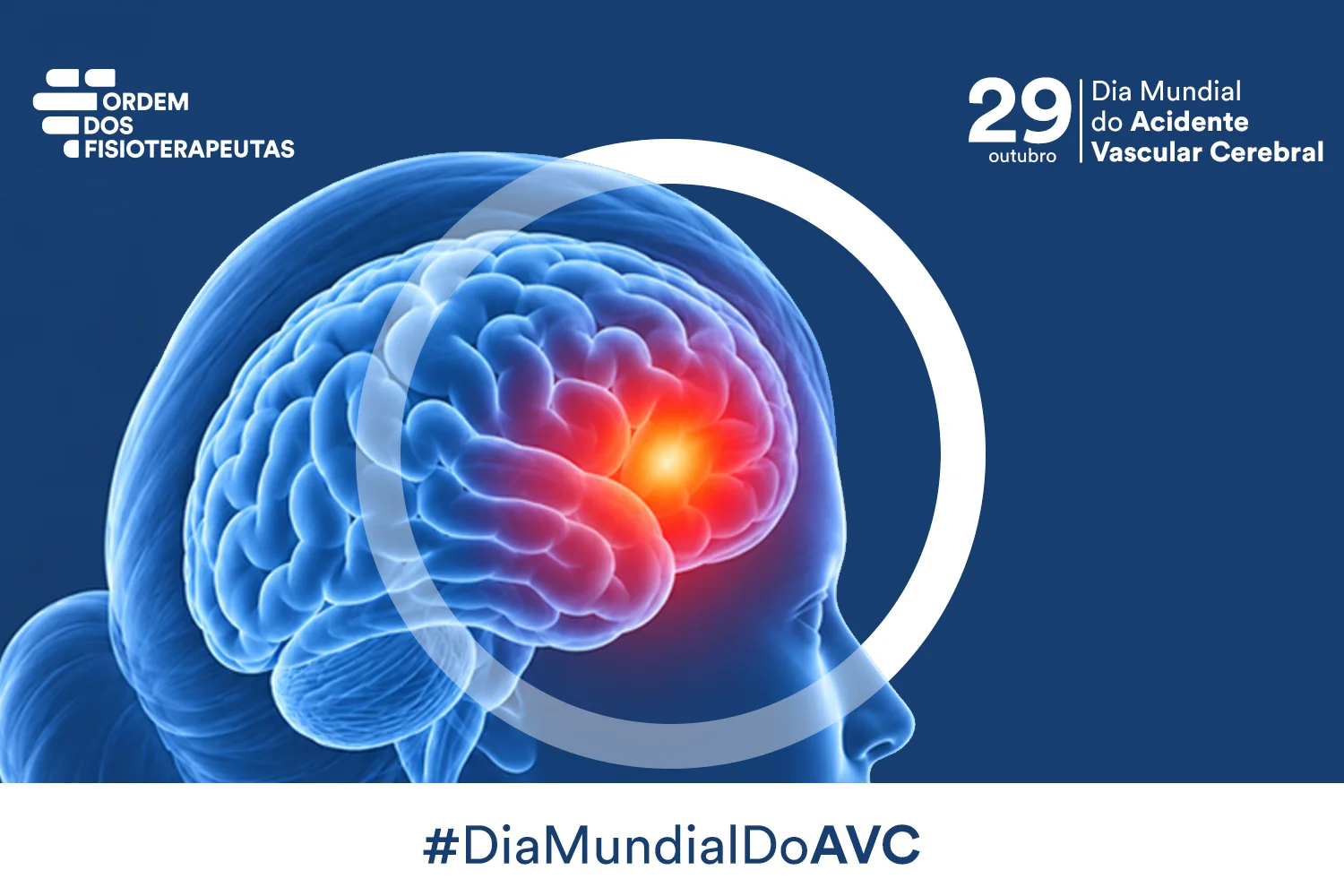
 

World Stroke Day: Physiotherapy – from prevention to rehabilitation

29 October marks the World Stroke Day, an opportunity to emphasise the importance of prevention, the recognition of risk factors and timely access to rehabilitation care.

Physiotherapy can play a role at various stages of this journey. In terms of prevention, it helps to reduce the risk of stroke by promoting physical activity, reducing a sedentary lifestyle and supporting safe exercise tailored to each individual.

Following a stroke, rehabilitation should begin as early as possible and be tailored to the individual, with the intensity of the programme adapted to each person’s needs and abilities. The physiotherapist’s intervention aims to promote mobility and functionality, restore abilities and encourage the greatest possible independence and participation in everyday activities.

Continuity of care is equally important throughout the recovery process, keeping pace with the changing needs and goals of each individual.

On this World Stroke Day, the Portuguese Physiotherapists’ Association emphasises the importance of considering physiotherapy throughout the entire process: from prevention to rehabilitation.


Job Vacancy Board – New Version

The Portuguese Physiotherapists’ Association has launched a new version of its Job Vacancies Portal, featuring a revamped interface, a clearer layout of information and new features aimed at members and employers.
Members now have access to a simpler and more intuitive way of viewing vacancies, with search options by keyword, company, contract type, job type and location.
 
Companies benefit from a more organised process for creating and managing job vacancies, as well as metrics that enable them to monitor the views and performance of the vacancies they have posted.
The update aims to make the Job Board simpler, more efficient and better suited to the needs of its various users.
 
See the Job Vacancies 

Staying active at work: the contribution of physiotherapy to workers’ health

October is the Ergonomics Month, the interdisciplinary field dedicated to adapting work to people. The date also provides an opportunity to recall that several of its principles, such as task and posture variety, breaks, and the suitability of the workstation and work organisation, are integral to the physiotherapist’s role in occupational health, particularly in the prevention and management of work-related musculoskeletal injuries.

Work-related musculoskeletal disorders result from a combination of various factors. They may be linked to physical and biomechanical demands, such as repetitive movements, the application of force, the handling of loads or prolonged periods spent in the same position, as well as to organisational, psychosocial and individual factors.

Prevention, therefore, does not involve finding a single “correct posture” to maintain throughout the day. Ensuring greater variety in movement and position, encouraging active breaks, and adapting the workstation and work organisation to the individual’s needs are important strategies for promoting health and wellbeing in the workplace.


The role of physiotherapy

Physiotherapy can make a specific contribution in this context. The Directorate-General for Health recognises that physiotherapists can form part of occupational health and safety teams, in accordance with the occupational risks identified and the priorities of each service.

In the field of occupational health, physiotherapists can help to assess workers’ functional capacity and the physical demands of their work, identify factors linked to musculoskeletal problems, and promote strategies for movement, exercise, education and adaptation tailored to the needs of each individual and each work context.


Moving around whilst at work

A “Move at Work” campaign”, from the European Region of World Physiotherapy, emphasises a simple idea: the body needs movement throughout the working day. Reducing long periods of sitting, changing positions, incorporating movement breaks and developing more active habits can all form part of a healthier approach to work.

The Portuguese Physiotherapists’ Association highlights the contribution of physiotherapy to creating more active, healthy work environments that are tailored to people’s needs, in collaboration with other professionals in occupational health teams.


The Portuguese Physiotherapists’ Association and APUFISIO strengthen their collaboration to promote physiotherapy units

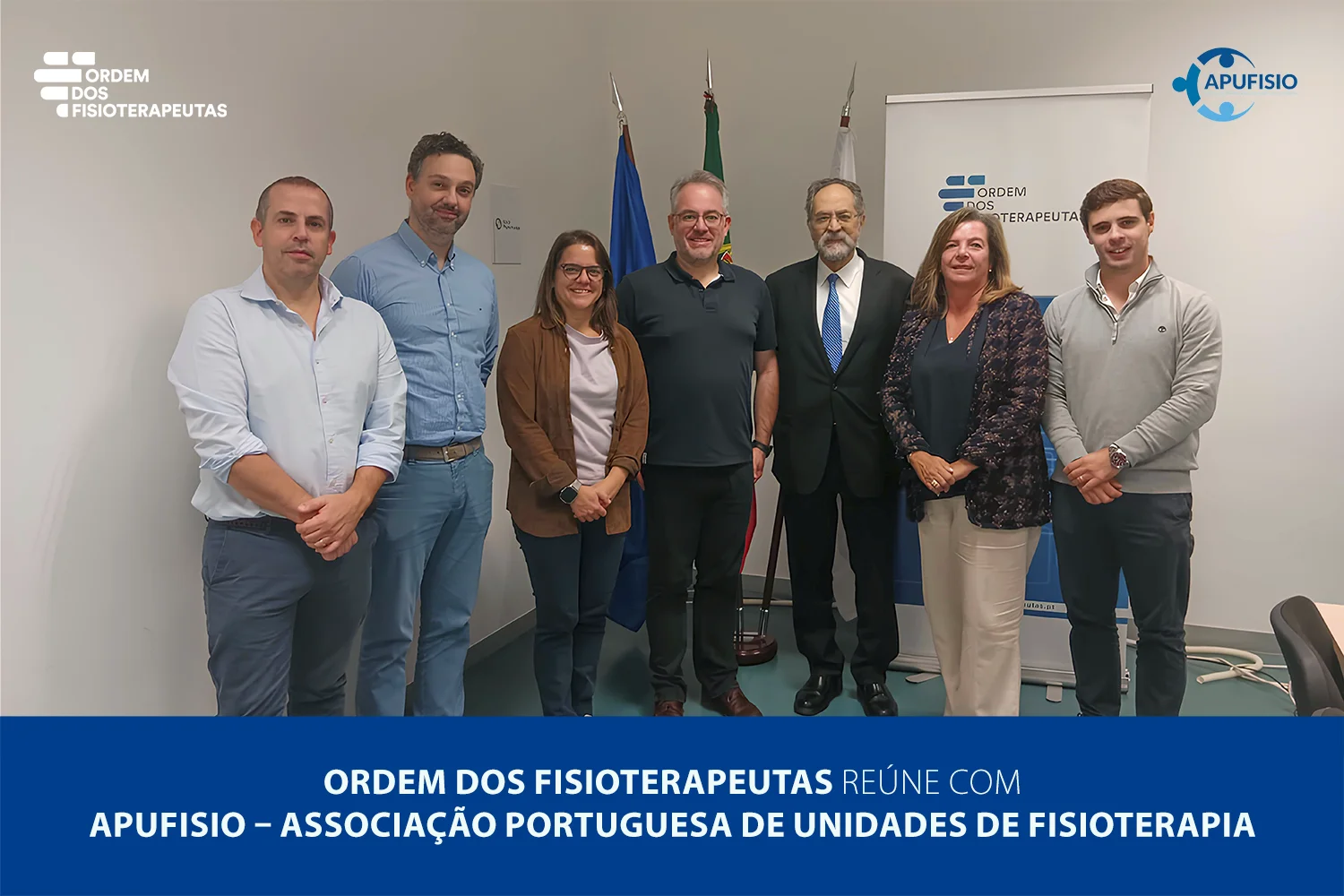
On 22 October, the Executive Committee of the Portuguese Physiotherapists’ Association met with the Executive Committee of the Portuguese Association of Physiotherapy Practices (APUFISIO), with the aim of identifying areas for collaboration to enhance the role of Physiotherapy Units and promote the quality and safety of the care provided.


The meeting provided an opportunity to share objectives and priorities, with particular emphasis on the importance of understanding the difficulties encountered on the ground and developing joint initiatives that contribute to enhancing the status of physiotherapy units.


Among the topics covered were the regulatory framework for physiotherapy units, in particular issues relating to the implementation of Ministerial Order No. 88/2024/1 of 11 March and its subsequent updates, and the importance of developing systems for recording and standardising information in physiotherapy.


The meeting marked a first step towards strengthening the links between the two organisations, based on the sharing of knowledge and the identification of solutions to common challenges.


National Cerebral Palsy Day: promoting functionality, participation and quality of life

20 October marks the National Cerebral Palsy Day, established in 2014 by Resolution No. 27/2014 of the Assembly of the Republic, with the aim of raising awareness of this condition and promoting inclusion, participation and equal opportunities for people with cerebral palsy.

Cerebral palsy refers to a group of early-onset neurodevelopmental conditions characterised by permanent, but not static, abnormalities in movement and posture, which may limit activity and co-occur with sensory, cognitive or communication impairments. The latest data from the National Cerebral Palsy Surveillance Programme indicate that, amongst children born in Portugal between 2001 and 2015, the risk of cerebral palsy at the age of 5 remained stable at around 1.7 per 1,000 children.

Over the past few decades, the role of physiotherapy in cerebral palsy has undergone a significant paradigm shift. The aim is not to seek to “normalise” movement, but to enhance each child’s ability to move and to participate actively in a range of activities across the various contexts of their lives.

The intervention is dynamic and centred on the priorities and needs of families, with objectives defined in partnership, tailored to the child’s different natural environments in line with their interests and routines.

The physiotherapist can adapt activities, environments and levels of challenge, creating opportunities for the child to explore, practise and develop strategies that promote greater independence and participation at home, at school and in the community.

Physiotherapy also plays an important role in promoting health and physical activity, helping to prevent the effects of inactivity and to improve children’s strength, endurance, mobility, physical ability and involvement in meaningful everyday activities.

On this National Cerebral Palsy Day, the Portuguese Physiotherapists’ Association emphasises the importance of an intervention centred on the individual, their abilities and their goals.

This is because, in cerebral palsy, promoting movement also means creating opportunities to play, learn, explore, interact and participate, thereby contributing to a life with greater independence and a better quality of life.


Dia da Ordem 2026 em destaque na Valor Magazine

A Valor Magazine dedica uma página ao Dia da Ordem dos Fisioterapeutas 2026, realizado a 30 de setembro, data em que a Ordem assinalou o seu 7.º aniversário.

O artigo recupera a reflexão que esteve na base dos cinco eventos promovidos nas Regiões Norte, Centro, Sul, Açores e Madeira, sob o tema “O Cálculo do Valor da Intervenção do Fisioterapeuta”.

Ao longo dos encontros, fisioterapeutas, representantes institucionais e convidados debateram a necessidade de avaliar o contributo da Fisioterapia para além da contabilização de atos, sessões ou procedimentos, valorizando os resultados alcançados junto das pessoas, nomeadamente ao nível da funcionalidade, autonomia, qualidade de vida e participação.

A publicação destaca também as intervenções de Julian Perelman, Eduardo Cruz e Nuno Cordeiro, bem como a intervenção de abertura do Bastonário da Ordem dos Fisioterapeutas, António Lopes, e a dimensão descentralizada do Dia da Ordem, que permitiu levar esta reflexão às cinco Regiões.


Dia Mundial da Coluna: cuidar da saúde da coluna ao longo da vida

Assinala-se hoje, 16 de outubro, o World Spine Day, que em 2026 decorre sob o tema internacional “Spine Health for Life”, reforçando a importância de promover a saúde da coluna ao longo de todas as fases da vida.

A saúde da coluna é importante para a mobilidade, a funcionalidade e a participação nas atividades do dia a dia. A dor nas costas pode limitar essas atividades, mas manter-se ativo e procurar orientação adequada quando necessário pode fazer a diferença.

A Fisioterapia tem um papel importante na promoção da saúde da coluna, na avaliação e gestão da dor e na recuperação da funcionalidade. A intervenção pode integrar educação para a saúde, exercício, avaliação do movimento e estratégias individualizadas, ajustadas às necessidades, objetivos e contexto de cada pessoa.

Manter-se ativo, adotar hábitos saudáveis e criar ambientes que favoreçam o movimento contribuem para a saúde da coluna. Mais do que procurar uma única postura “correta”, importa favorecer o movimento, a atividade e a participação no quotidiano.

A educação para a saúde, o exercício e uma intervenção individualizada podem também contribuir para melhorar a funcionalidade, o bem-estar e a qualidade de vida.

Neste Dia Mundial da Coluna, a Ordem dos Fisioterapeutas reforça uma mensagem simples: cuidar da saúde da coluna é promover o movimento e a funcionalidade ao longo da vida.


Dia Nacional de Luta Contra a Dor: prevenir e intervir precocemente pode ajudar a reduzir o impacto da dor

Assinala-se hoje, 16 de outubro, o National Day of Action Against Pain, uma oportunidade para aumentar a literacia sobre a dor e reforçar a importância da prevenção, da intervenção precoce e de respostas ajustadas às necessidades de cada pessoa.

A dor crónica é uma condição multidimensional, influenciada por fatores biológicos, psicológicos e sociais. Pode limitar a funcionalidade, afetar a qualidade de vida e a saúde mental e reduzir a participação nas atividades do dia a dia.

Por isso, prevenir e intervir precocemente pode ajudar a reduzir o impacto da dor. A sua abordagem deve considerar não apenas os sintomas, mas também a forma como estes interferem com o movimento, a autonomia e a participação da pessoa na sua vida quotidiana. Esta formulação acompanha a orientação que a Ordem adotou na revisão dos conteúdos de 2026, evitando estabelecer uma relação excessivamente direta entre prevenção e ausência de dor incapacitante.

A Fisioterapia pode contribuir para avaliar fatores funcionais associados à dor e para uma intervenção ajustada às necessidades de cada pessoa. Movimento e exercício adaptado, educação para o autocuidado, estratégias de gestão da dor e programas de reabilitação podem integrar esta intervenção.

A prevenção e o tratamento são dimensões distintas, mas podem integrar uma resposta mais ampla à dor. Prevenir também é cuidar, promovendo estratégias que favoreçam a funcionalidade, a autonomia e a qualidade de vida.

Neste Dia Nacional de Luta Contra a Dor, a Ordem dos Fisioterapeutas reforça o contributo da Fisioterapia para prevenir e gerir a dor, melhorar a funcionalidade e promover a qualidade de vida.


Pedro Maciel Barbosa

Specialist physiotherapist at the Matosinhos Local Health Unit Sub-coordinator for Primary Health Care, Matosinhos Local Health Unit Visiting Assistant Professor at the Porto School of Health Member of the Board of Directors of the Foundation for Health - SNS Member of the General Council of the Order of Physiotherapists

Carlos Sand

Carlos Areia has been a physiotherapist since 2013, and has worked in various hospitals, clinics and clubs in both Portugal and the UK. He began his academic career at Oxford University in 2016, where he led a clinical trial comparing physiotherapy vs surgery in anterior cruciate injuries in 32 hospitals in England. In 2018 she moved to the neurosciences department, where she developed her own studies on remote monitoring of vital signs, which were implemented during the pandemic. Here he discovered his passion for data, and in 2022, he joined Digital Science as a Data Scientist. He completed his PhD earlier this year, and has more than 60 publications in journals such as The Lancet, BMJ, Cochrane, among others. He is also an honorary lecturer at Oxford Brookes University and a consultant in clinical research.

Eduardo José Brazete Carvalho Cruz

PhD in Physiotherapy from the University of Brighton, UK. Post-Doctorate in Epidemiology from the National School of Public Health at the New University of Lisbon.
Coordinator of the Studies and Planning Office of the Order of Physiotherapists. Coordinating Professor of the Physiotherapy Department of the School of Health of the Polytechnic Institute of Setúbal (ESS-IPS). President of the ESS-IPS Technical-Scientific Council. Coordinator of the Physiotherapy Department at ESS-IPS. Integrated Researcher at the Comprehensive Health Research Centre (CHRC) (a partnership between FCM-UNL, the National School of Public Health, the University of Évora, the Lisbon Institute of Global Mental Health and Santo Espírito Hospital, Terceira Island, Azores).

Sara Souto Miranda

Sara Souto Miranda has a bachelor's and master's degree in physiotherapy from the University of Aveiro, and a postgraduate qualification in adult respiratory physiotherapy from the same institution. In 2023 she completed her double doctorate in Rehabilitation Sciences/Health, Medicine and Life Sciences at the Universities of Aveiro and Maastricht (Netherlands) and is currently working as a technical-scientific advisor to the Studies and Planning Office (GEP) of the Order of Physiotherapists, and as a guest lecturer at the Piaget Institute in Vila Nova de Gaia. As a member of the Respiratory Research and Rehabilitation Laboratory at the University of Aveiro (Lab3R), she has carried out applied research in which she has assessed and treated patients with respiratory pathology, having taken part in 6 research projects. Throughout her career she has published 19 scientific articles in international peer-reviewed journals with an impact factor, 1 book chapter and more than 50 abstracts in conference proceedings. She was a research volunteer at the Ciro rehabilitation centre (Centre for expertise in chronic organ failure) in the Netherlands, and is currently a member of the Guideline Methodology Network of European Respiratory Society. She was honoured by European Lung Foundation e European Respiratory Society for carrying out patient-centred research, by the Directorate General for Higher Education with a merit grant for his master's degree, and by the Ciro Centre with a grant to support research abroad.

This site uses cookies to enable a better user experience.
By browsing the site you are consenting to its use.