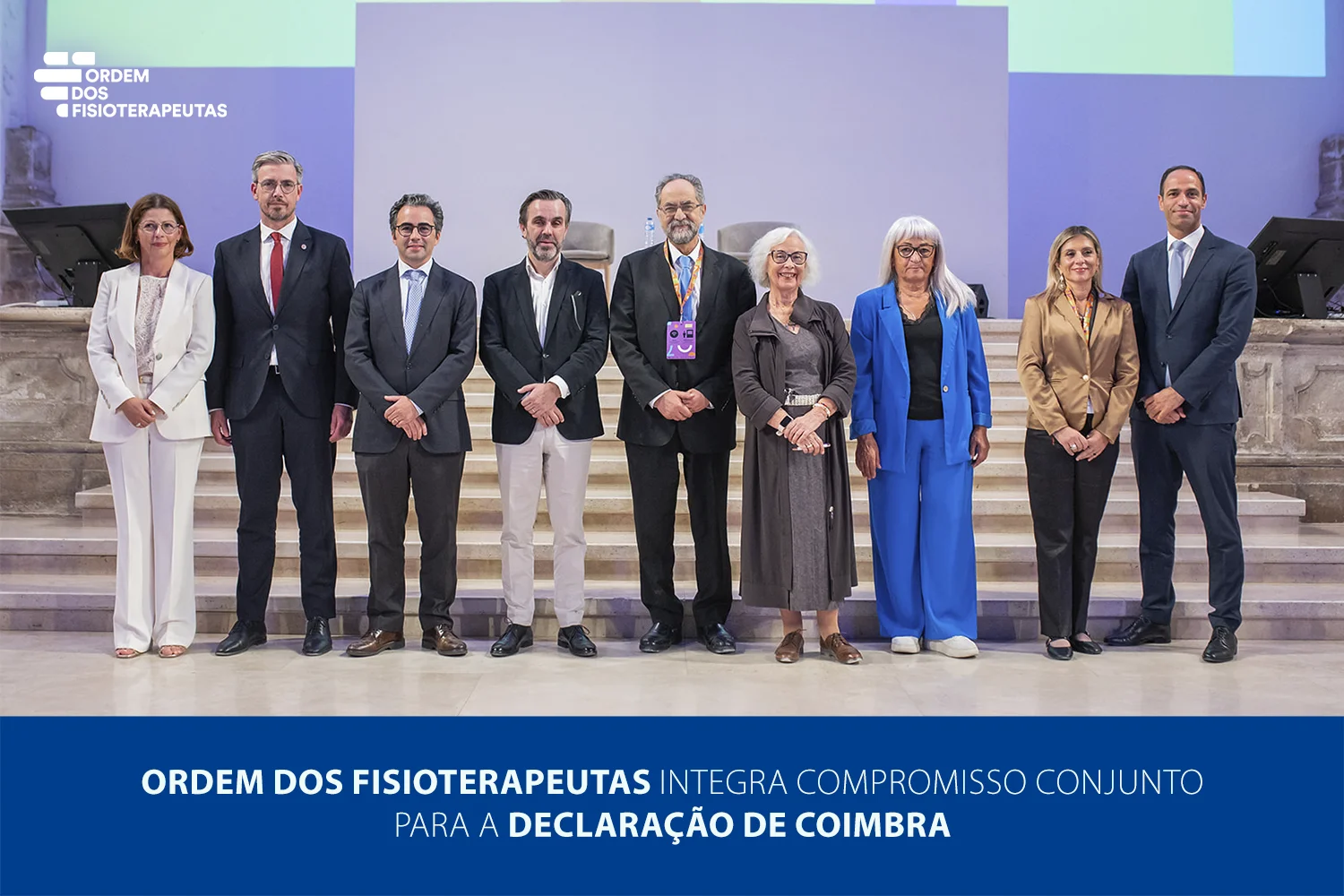
The Portuguese Physiotherapists’ Association has signed up to the joint commitment for the Coimbra Declaration

The Portuguese Physiotherapists’ Association, represented by its President, António Lopes, took part on 9 October in Coimbra in a meeting at which the professional health associations made a joint commitment to The Coimbra 2026 Declaration — The Wellbeing of Health Professionals in the Governance of Health Systems.

This commitment, which will be formalised upon the signing of the Declaration, aims to place the health and wellbeing of healthcare professionals amongst the priorities for governance, quality and sustainability within healthcare organisations and systems.

Organised by the Portuguese Psychologists« Association, with the support of the Coimbra Local Health Unit, the initiative took place as part of the Strategic Forum »Work and Professionals in the Health Sector | Governance, Well-being and Sustainability’, which formed part of the 7th National Congress of the Portuguese Psychologists’ Association.

Held on the eve of World Mental Health Day, which falls on 10 October, the meeting emphasised the importance of creating working conditions that protect the health and wellbeing of professionals, recognising that this responsibility cannot depend solely on each person’s individual ability to cope with the demands of their job.

The Declaration recognises that safeguarding the health and wellbeing of professionals requires a shared responsibility and action to improve their working conditions. To put this vision into practice, it sets out five commitments:

  • To integrate the health of healthcare professionals into governance;
  • To understand, assess and monitor working conditions and the quality of work;
  • Prevention through the organisation and transformation of work;
  • To develop leadership and healthy working cultures;
  • Turning evidence into accountability and action.

Priorities include the regular assessment of psychosocial risks, accompanied by action plans and monitoring of outcomes, and improvements to factors such as workload, available resources, autonomy, leadership, recognition and the balance between work, personal and family life.

The document calls for action from policy-makers, health organisations and their leaders, professional bodies, academic and scientific institutions, and healthcare professionals themselves, recognising the well-being of carers as an essential prerequisite for the quality of care and the sustainability of healthcare systems.
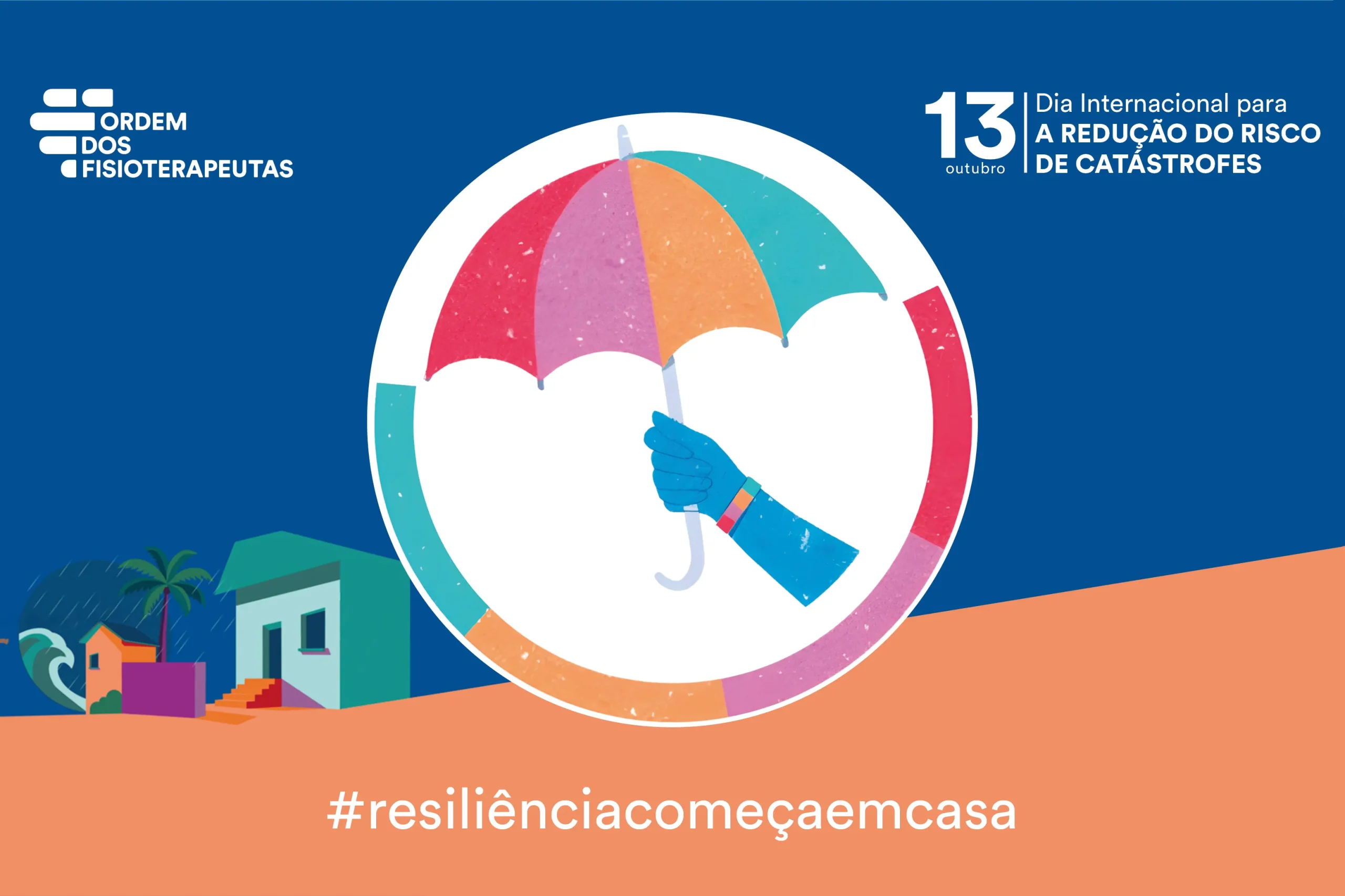


International Day for Disaster Risk Reduction: resilience starts at home

Today, 13 October, marks the International Day for Disaster Risk Reduction, a day designated by the United Nations to promote a global culture of prevention, preparedness and risk reduction.

In 2026, the theme of the international campaign is “Resilience Starts at Home” — “Resilience begins at home” — and places housing and households at the heart of building more resilient communities. The message is clear: everyone should be able to live in a home that is safe, accessible and capable of withstanding the risks present in the local area.

Our homes are the places where we seek protection and safety, but they can also be among the first to be affected when floods, extreme temperatures or other adverse events occur. Reducing the risk therefore involves being aware of the existing dangers, improving the safety of homes, ensuring information is accessible, and making sure that warning systems reach families, are understood and enable a timely response.

This year’s campaign also emphasises that resilience does not depend solely on individual choices. Urban and spatial planning, building regulations, investment in safe housing and community participation are also key factors in reducing vulnerabilities and protecting people’s lives, livelihoods and future.

Disaster preparedness also includes the capacity of health systems to respond to new needs without disrupting essential care. The World Health Organisation warns that emergencies can lead to a significant increase in rehabilitation needs whilst, at the same time, compromising access to existing services. For this reason, rehabilitation must be integrated into preparedness, response and recovery in emergency situations.

Physiotherapists can play a part in these responses, helping to prevent complications, promote functional recovery in those affected and ensure continuity of care for those who already require rehabilitation.

On this International Day for Disaster Risk Reduction, the Portuguese Physiotherapists’ Association endorses the 2026 message and reminds us that preparedness also begins at home.

In this context, the Association is once again making available the information leaflet “Physiotherapy in Emergency Situations”, which sets out practical guidance aimed at enhancing families“ preparedness, safety and independence in critical situations. Please see the leaflet ”Physiotherapy in Emergency Situations”.


Pedro Maciel Barbosa

Specialist physiotherapist at the Matosinhos Local Health Unit Sub-coordinator for Primary Health Care, Matosinhos Local Health Unit Visiting Assistant Professor at the Porto School of Health Member of the Board of Directors of the Foundation for Health - SNS Member of the General Council of the Order of Physiotherapists

Carlos Sand

Carlos Areia has been a physiotherapist since 2013, and has worked in various hospitals, clinics and clubs in both Portugal and the UK. He began his academic career at Oxford University in 2016, where he led a clinical trial comparing physiotherapy vs surgery in anterior cruciate injuries in 32 hospitals in England. In 2018 she moved to the neurosciences department, where she developed her own studies on remote monitoring of vital signs, which were implemented during the pandemic. Here he discovered his passion for data, and in 2022, he joined Digital Science as a Data Scientist. He completed his PhD earlier this year, and has more than 60 publications in journals such as The Lancet, BMJ, Cochrane, among others. He is also an honorary lecturer at Oxford Brookes University and a consultant in clinical research.

Eduardo José Brazete Carvalho Cruz

PhD in Physiotherapy from the University of Brighton, UK. Post-Doctorate in Epidemiology from the National School of Public Health at the New University of Lisbon.
Coordinator of the Studies and Planning Office of the Order of Physiotherapists. Coordinating Professor of the Physiotherapy Department of the School of Health of the Polytechnic Institute of Setúbal (ESS-IPS). President of the ESS-IPS Technical-Scientific Council. Coordinator of the Physiotherapy Department at ESS-IPS. Integrated Researcher at the Comprehensive Health Research Centre (CHRC) (a partnership between FCM-UNL, the National School of Public Health, the University of Évora, the Lisbon Institute of Global Mental Health and Santo Espírito Hospital, Terceira Island, Azores).

Sara Souto Miranda

Sara Souto Miranda has a bachelor's and master's degree in physiotherapy from the University of Aveiro, and a postgraduate qualification in adult respiratory physiotherapy from the same institution. In 2023 she completed her double doctorate in Rehabilitation Sciences/Health, Medicine and Life Sciences at the Universities of Aveiro and Maastricht (Netherlands) and is currently working as a technical-scientific advisor to the Studies and Planning Office (GEP) of the Order of Physiotherapists, and as a guest lecturer at the Piaget Institute in Vila Nova de Gaia. As a member of the Respiratory Research and Rehabilitation Laboratory at the University of Aveiro (Lab3R), she has carried out applied research in which she has assessed and treated patients with respiratory pathology, having taken part in 6 research projects. Throughout her career she has published 19 scientific articles in international peer-reviewed journals with an impact factor, 1 book chapter and more than 50 abstracts in conference proceedings. She was a research volunteer at the Ciro rehabilitation centre (Centre for expertise in chronic organ failure) in the Netherlands, and is currently a member of the Guideline Methodology Network of European Respiratory Society. She was honoured by European Lung Foundation e European Respiratory Society for carrying out patient-centred research, by the Directorate General for Higher Education with a merit grant for his master's degree, and by the Ciro Centre with a grant to support research abroad.

This site uses cookies to enable a better user experience.
By browsing the site you are consenting to its use.