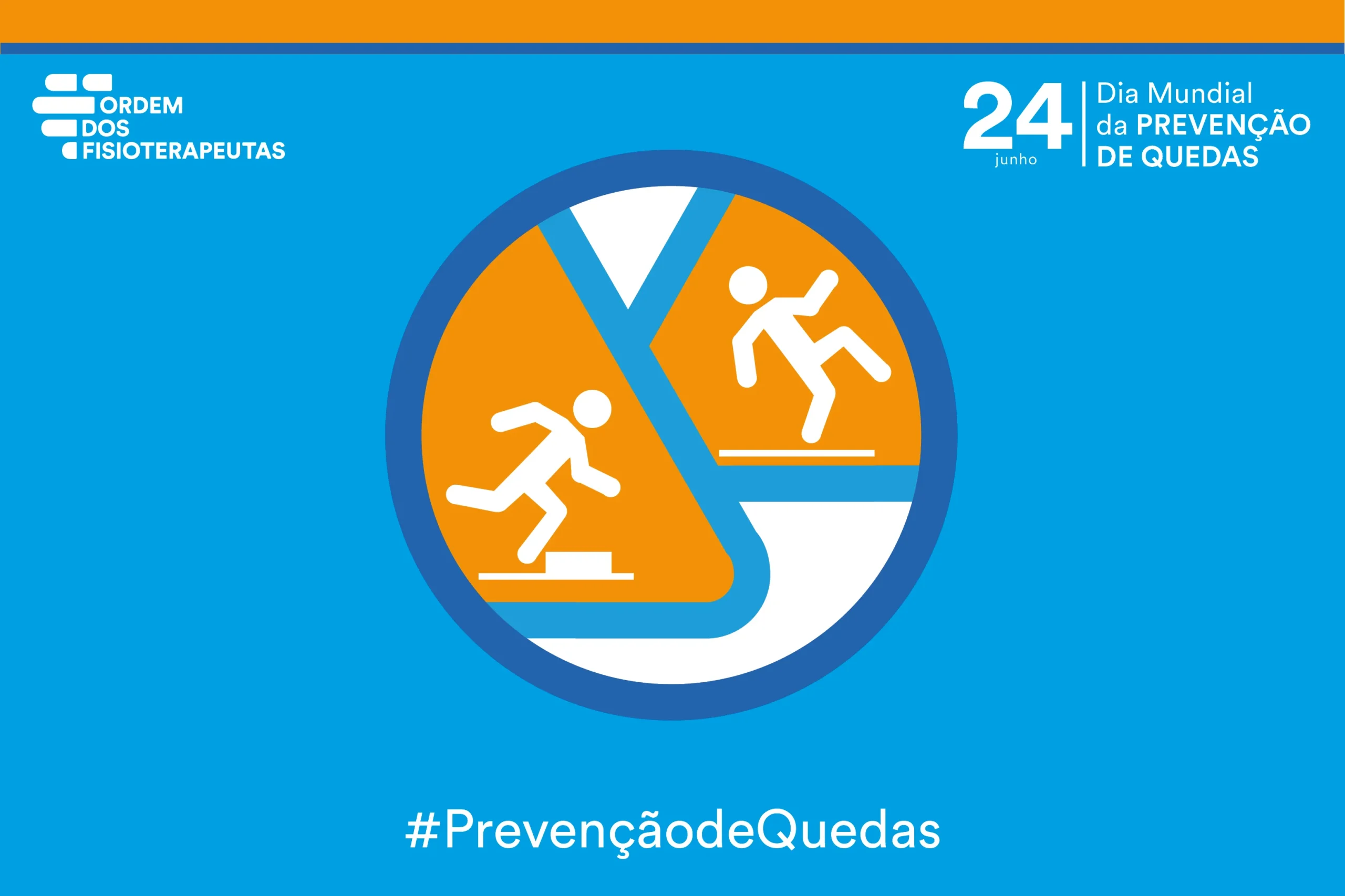
World Fall Prevention Day: take care today to prevent falls tomorrow

Today, 24 June, marks World Fall Prevention Day, a date which provides an opportunity to raise awareness of the risks associated with falls and the importance of effective prevention strategies.

Fall prevention remains an internationally recognised public health priority. According to the World Health Organisation, falls are the second leading cause of death due to unintentional injuries worldwide, which are associated each year with hundreds of thousands of deaths and millions of cases requiring medical care. The impact is particularly significant amongst older people, among whom the risk of serious injury, loss of independence and institutionalisation is higher.

Although falls can occur at any age, they are of particular concern in older people because of their association with fractures, fear of falling, reduced mobility and loss of independence. In this context, Prevention is key.

Scientific evidence shows that Many falls can be prevented. Risk education, the promotion of physical activity, improvements to environmental conditions and the early identification of risk factors are essential components of this prevention strategy.

The physiotherapist’s treatment aims to improve balance, muscle strength, posture, flexibility and functional ability, thereby helping to ensure greater safety when moving around and to maintain independence and participation in activities of daily living.

The Portuguese Physiotherapists’ Association marks this occasion by highlighting the role of physiotherapy in assessing the risk of falls, in providing guidance on exercise programmes tailored to each individual, and in promoting practical strategies to prevent falls and maintain mobility, safety and independence throughout life.

Download herei a presentation offering practical prevention recommendations, focusing on reducing risks at home, physical activity, looking after one’s eyesight and managing medication, wearing suitable clothing and footwear, and consulting a physiotherapist, as a healthcare professional with expertise in assessing the risk of falls and advising on preventive strategies.
Falls don’t happen by chance.
Assess. Exercise. Prevent.

Pedro Maciel Barbosa

Specialist physiotherapist at the Matosinhos Local Health Unit Sub-coordinator for Primary Health Care, Matosinhos Local Health Unit Visiting Assistant Professor at the Porto School of Health Member of the Board of Directors of the Foundation for Health - SNS Member of the General Council of the Order of Physiotherapists

Carlos Sand

Carlos Areia has been a physiotherapist since 2013, and has worked in various hospitals, clinics and clubs in both Portugal and the UK. He began his academic career at Oxford University in 2016, where he led a clinical trial comparing physiotherapy vs surgery in anterior cruciate injuries in 32 hospitals in England. In 2018 she moved to the neurosciences department, where she developed her own studies on remote monitoring of vital signs, which were implemented during the pandemic. Here he discovered his passion for data, and in 2022, he joined Digital Science as a Data Scientist. He completed his PhD earlier this year, and has more than 60 publications in journals such as The Lancet, BMJ, Cochrane, among others. He is also an honorary lecturer at Oxford Brookes University and a consultant in clinical research.

Eduardo José Brazete Carvalho Cruz

PhD in Physiotherapy from the University of Brighton, UK. Post-Doctorate in Epidemiology from the National School of Public Health at the New University of Lisbon.
Coordinator of the Studies and Planning Office of the Order of Physiotherapists. Coordinating Professor of the Physiotherapy Department of the School of Health of the Polytechnic Institute of Setúbal (ESS-IPS). President of the ESS-IPS Technical-Scientific Council. Coordinator of the Physiotherapy Department at ESS-IPS. Integrated Researcher at the Comprehensive Health Research Centre (CHRC) (a partnership between FCM-UNL, the National School of Public Health, the University of Évora, the Lisbon Institute of Global Mental Health and Santo Espírito Hospital, Terceira Island, Azores).

Sara Souto Miranda

Sara Souto Miranda has a bachelor's and master's degree in physiotherapy from the University of Aveiro, and a postgraduate qualification in adult respiratory physiotherapy from the same institution. In 2023 she completed her double doctorate in Rehabilitation Sciences/Health, Medicine and Life Sciences at the Universities of Aveiro and Maastricht (Netherlands) and is currently working as a technical-scientific advisor to the Studies and Planning Office (GEP) of the Order of Physiotherapists, and as a guest lecturer at the Piaget Institute in Vila Nova de Gaia. As a member of the Respiratory Research and Rehabilitation Laboratory at the University of Aveiro (Lab3R), she has carried out applied research in which she has assessed and treated patients with respiratory pathology, having taken part in 6 research projects. Throughout her career she has published 19 scientific articles in international peer-reviewed journals with an impact factor, 1 book chapter and more than 50 abstracts in conference proceedings. She was a research volunteer at the Ciro rehabilitation centre (Centre for expertise in chronic organ failure) in the Netherlands, and is currently a member of the Guideline Methodology Network of European Respiratory Society. She was honoured by European Lung Foundation e European Respiratory Society for carrying out patient-centred research, by the Directorate General for Higher Education with a merit grant for his master's degree, and by the Ciro Centre with a grant to support research abroad.

This site uses cookies to enable a better user experience.
By browsing the site you are consenting to its use.