Physiotherapy in Rare Diseases: functionality, autonomy and continuity of care

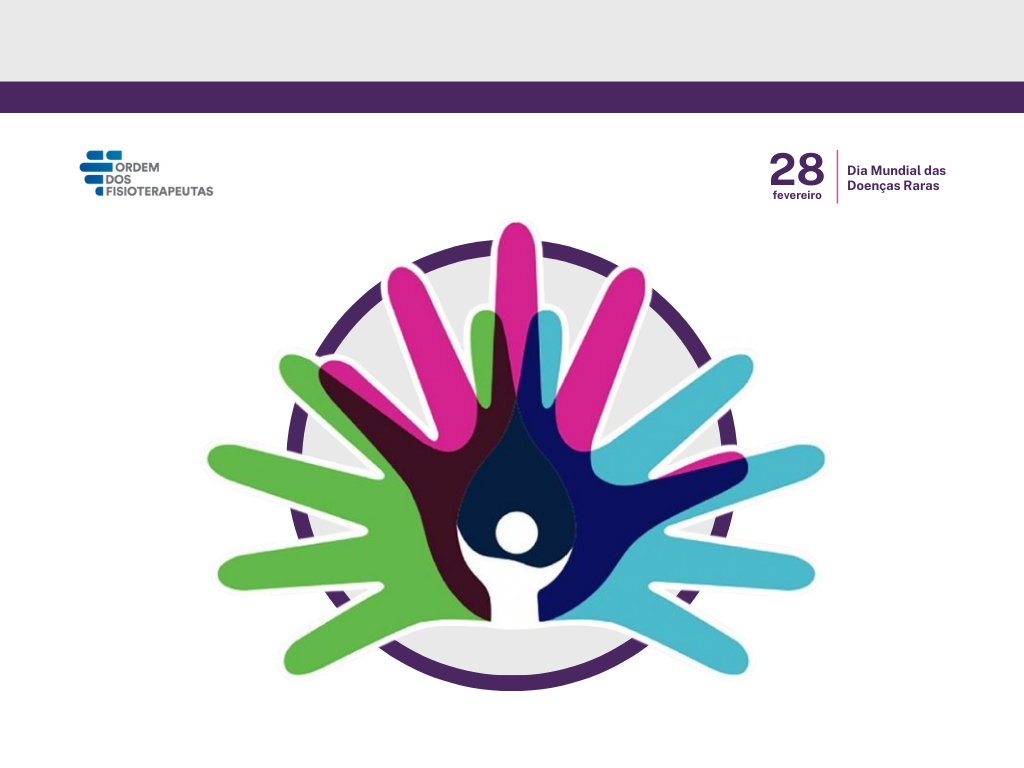
28 February marks the World Rare Disease Day, This date aims to raise awareness of the challenges faced by those living with these diseases and to reinforce the need for early diagnosis, specialised monitoring and fair access to healthcare.

A rare disease is one that affects fewer than 1 in 2,000 people. Despite the low individual prevalence, it is estimated that there are between 5,000 and 8,000 different rare diseases, which together affect millions of people in Europe and about 700 thousand in Portugal. Many of these diseases are genetic, complex and degenerative, often associated with functional limitations, emotional impact and socio-psychological challenges for both individuals and their families.

To support these patients, the Rare Disease Card, available at SNS Portal 24 and the SNS 24 App, which allows health professionals quick access to essential clinical information in emergency situations or transition of care, promoting greater safety and continuity of care.

In a context of high clinical complexity, physiotherapy plays a decisive role. As part of interdisciplinary teams, physiotherapeutic intervention focuses on preserving functionality, promoting autonomy and maximising active participation in daily life.

Intervention is always individualised and adapted to the person and the evolution of the clinical condition, and can include different approaches according to need.

The training of carers and family members and therapeutic education are also fundamental, promoting health literacy and greater safety and participation in the care pathway.

Rare diseases continue to pose significant challenges to health systems and society, including delays in diagnosis, gaps in care coverage and inequalities in access to specialised responses. In this context, it is essential to strengthen integrated, articulated and person-centred care models.

On this World Rare Disease Day, the Order of Physiotherapists reaffirms its commitment to an intervention based on scientific evidence, continuous throughout the life cycle and aimed at improving the quality of life of people living with these conditions.

Facebook
LinkedIn
Email

Pedro Maciel Barbosa

Specialist physiotherapist at the Matosinhos Local Health Unit Sub-coordinator for Primary Health Care, Matosinhos Local Health Unit Visiting Assistant Professor at the Porto School of Health Member of the Board of Directors of the Foundation for Health - SNS Member of the General Council of the Order of Physiotherapists

Carlos Sand

Carlos Areia has been a physiotherapist since 2013, and has worked in various hospitals, clinics and clubs in both Portugal and the UK. He began his academic career at Oxford University in 2016, where he led a clinical trial comparing physiotherapy vs surgery in anterior cruciate injuries in 32 hospitals in England. In 2018 she moved to the neurosciences department, where she developed her own studies on remote monitoring of vital signs, which were implemented during the pandemic. Here he discovered his passion for data, and in 2022, he joined Digital Science as a Data Scientist. He completed his PhD earlier this year, and has more than 60 publications in journals such as The Lancet, BMJ, Cochrane, among others. He is also an honorary lecturer at Oxford Brookes University and a consultant in clinical research.

Eduardo José Brazete Carvalho Cruz

PhD in Physiotherapy from the University of Brighton, UK. Post-Doctorate in Epidemiology from the National School of Public Health at the New University of Lisbon.
Coordinator of the Studies and Planning Office of the Order of Physiotherapists. Coordinating Professor of the Physiotherapy Department of the School of Health of the Polytechnic Institute of Setúbal (ESS-IPS). President of the ESS-IPS Technical-Scientific Council. Coordinator of the Physiotherapy Department at ESS-IPS. Integrated Researcher at the Comprehensive Health Research Centre (CHRC) (a partnership between FCM-UNL, the National School of Public Health, the University of Évora, the Lisbon Institute of Global Mental Health and Santo Espírito Hospital, Terceira Island, Azores).

Sara Souto Miranda

Sara Souto Miranda has a bachelor's and master's degree in physiotherapy from the University of Aveiro, and a postgraduate qualification in adult respiratory physiotherapy from the same institution. In 2023 she completed her double doctorate in Rehabilitation Sciences/Health, Medicine and Life Sciences at the Universities of Aveiro and Maastricht (Netherlands) and is currently working as a technical-scientific advisor to the Studies and Planning Office (GEP) of the Order of Physiotherapists, and as a guest lecturer at the Piaget Institute in Vila Nova de Gaia. As a member of the Respiratory Research and Rehabilitation Laboratory at the University of Aveiro (Lab3R), she has carried out applied research in which she has assessed and treated patients with respiratory pathology, having taken part in 6 research projects. Throughout her career she has published 19 scientific articles in international peer-reviewed journals with an impact factor, 1 book chapter and more than 50 abstracts in conference proceedings. She was a research volunteer at the Ciro rehabilitation centre (Centre for expertise in chronic organ failure) in the Netherlands, and is currently a member of the Guideline Methodology Network of European Respiratory Society. She was honoured by European Lung Foundation e European Respiratory Society for carrying out patient-centred research, by the Directorate General for Higher Education with a merit grant for his master's degree, and by the Ciro Centre with a grant to support research abroad.

This site uses cookies to enable a better user experience.
By browsing the site you are consenting to its use.